

African Mysteries
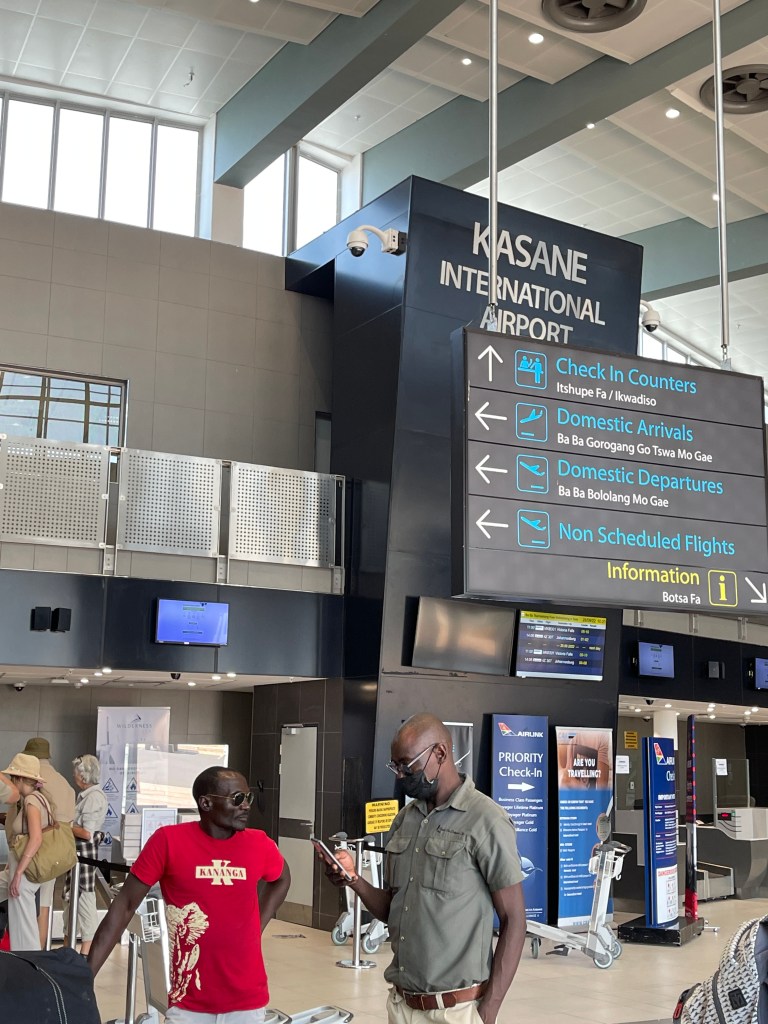
Before the reviews of our performance were filed, we were off to Kasane Airport for a flight to Victoria Falls.

That evening we have a date with a local family for dinner and our hosts produced a four course African feast for us. The mother of this family of four makes her living as a caterer and we benefit from her expertise. Her husband makes his living as a driver and that means a driver of any vehicles from cabs to tractor trailers. In a town teeming with tourists he is doing well. We met the son – predictably, a huge soccer fan – but the daughter, referred to as, “the princess,” was with her aunt. This was a nuclear family for sure and when asked about the polygamy that occurs throughout Africa, the husband simply said, “there are too many problems with that.” Indeed.

The pride that this family took in its success was heartwarming and in keeping with tribal values the women in the group retired to the kitchen to prepare food while the men talked and drank. Values and customs regarding women are tribal and entrenched and they hold the whole culture back but this was clearly not the time or place for that discussion. The evening closed after a fine dinner and a tour of the family’s garden which was rich with a variety of herbs and vegetables and the family’s particular pride – a stand of pineapples. This family was a great reminder that living at a relatively high level was possible in Africa.
At last, it was time to visit Victoria Falls.

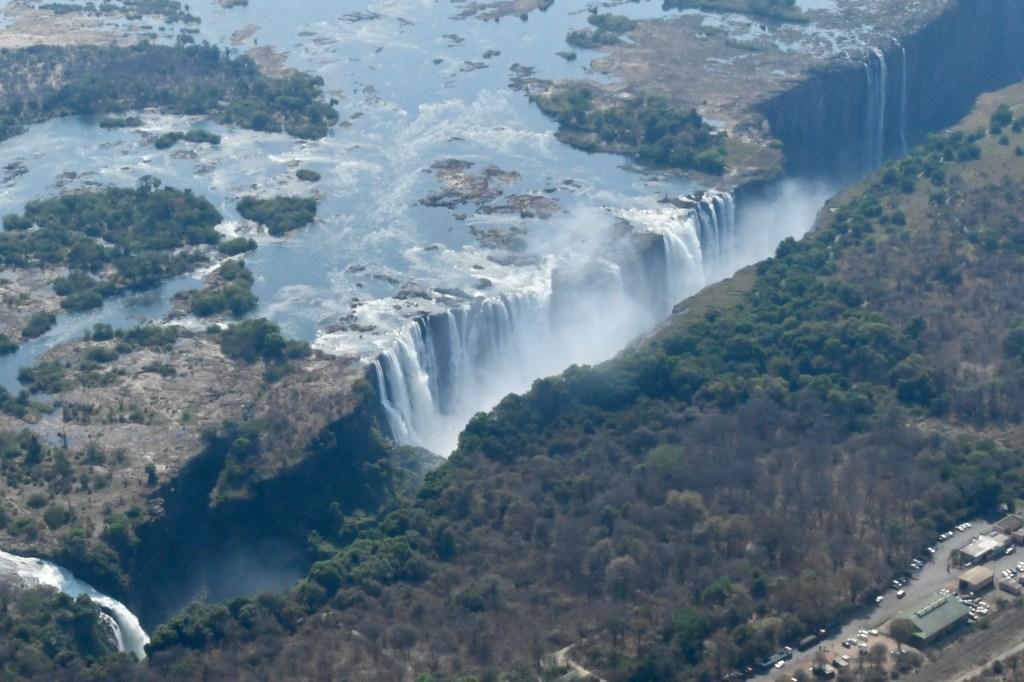
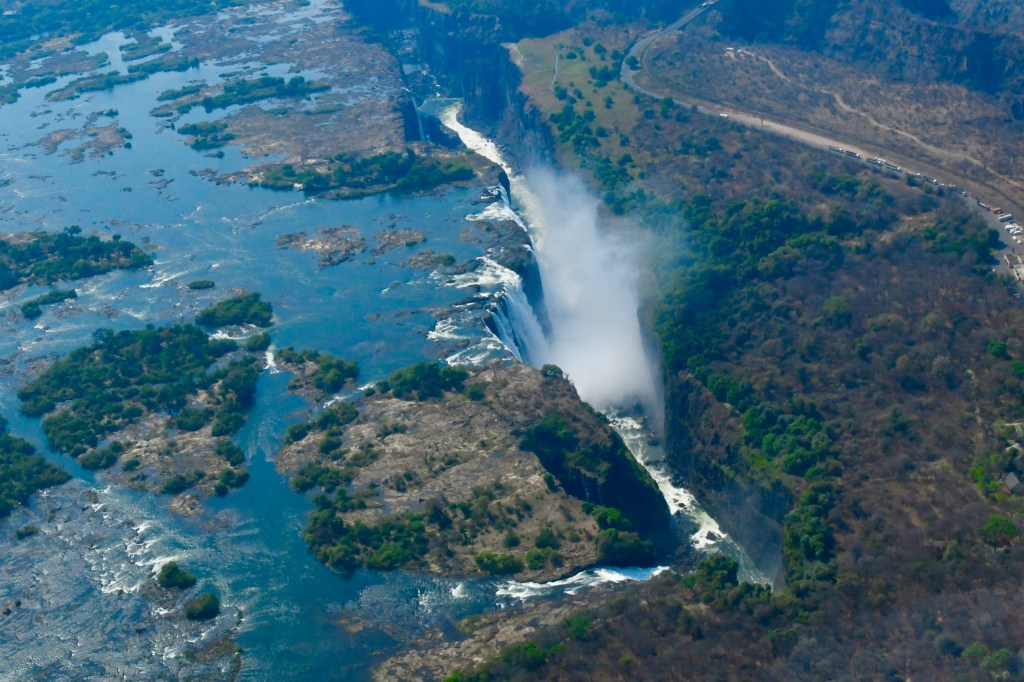
Victoria Falls is one of the world’s 7 Natural Wonders, and rightly so. The falls are twice as high as Niagara and they hold the title of the world’s longest; 500 million liters of Zambese water cascade every minute. Known to Africans as the Mosioa Tanya – the smoke that thunders – the falls plume rainbows and mist to the sky without ceasing. The falls were named by English explorer/missionary David Livingstone in 1855 – at the height of Britain’s colonial exuberance. A professor from a local university gave us a lecture on Livingstone’s exploits. Her talk was comprehensive and interesting. Many anecdotes were shared including the fact that many movies were made about the explorer including a 1939 offering in which Livingstone was played by Sir Cedric Hardwicke in an adventure movie and his performance captured Livingstone’s missionary fervor and unbreakable will. I mention the movie because it contains the line that most of us know…a line delivered by Henry Stanley, a reporter from the New York Herald tasked with finding Livingstone in the “Dark Continent:” “Doctor Livingstone I presume.” Of course his presumption was correct. The story added another dimension to the experience of the falls. The statue of Livingstone at the falls suggested the tentacles of European colonialism that was essential to many of Africa’s problems and I thought of a quote from Desmond Tutu that seemed to apply: “when the missionaries came they had the Bible and we had the land. We closed our eyes. When we opened them we had the Bible and they had the land.” True.
The historical truths were easily overshadowed by the stunning beauty of the falls. We are excited by the fact that we are scheduled to become “helicopter angels” the next morning. We are due for a helicopter flight over the five main cataracts of the falls, including the famous Devil’s Cataract. We were booked on one of the day’s earliest flights so we would enjoy the fabulous morning light as we buzzed over the Falls at about 4,000 feet. The helicopter service was located about 5 miles from Shearwater Lodge where we were staying and on the short ride to the pad, anxiety and expectation were mixed. For some, it was the first helicopter flight of their lives and some discomfort was to be expected. As we lifted off, all negative feelings were erased by the beauty that leapt from every point of the compass. In short order we became “helicopter angels” in keeping with Livingstone’s observation that, “the falls are so lovely they must have been gazed upon by angels in their flight.” Today, we are the angels.
We flew through the mist and rainbows and for the first time the word magnificent buzzed through the group.

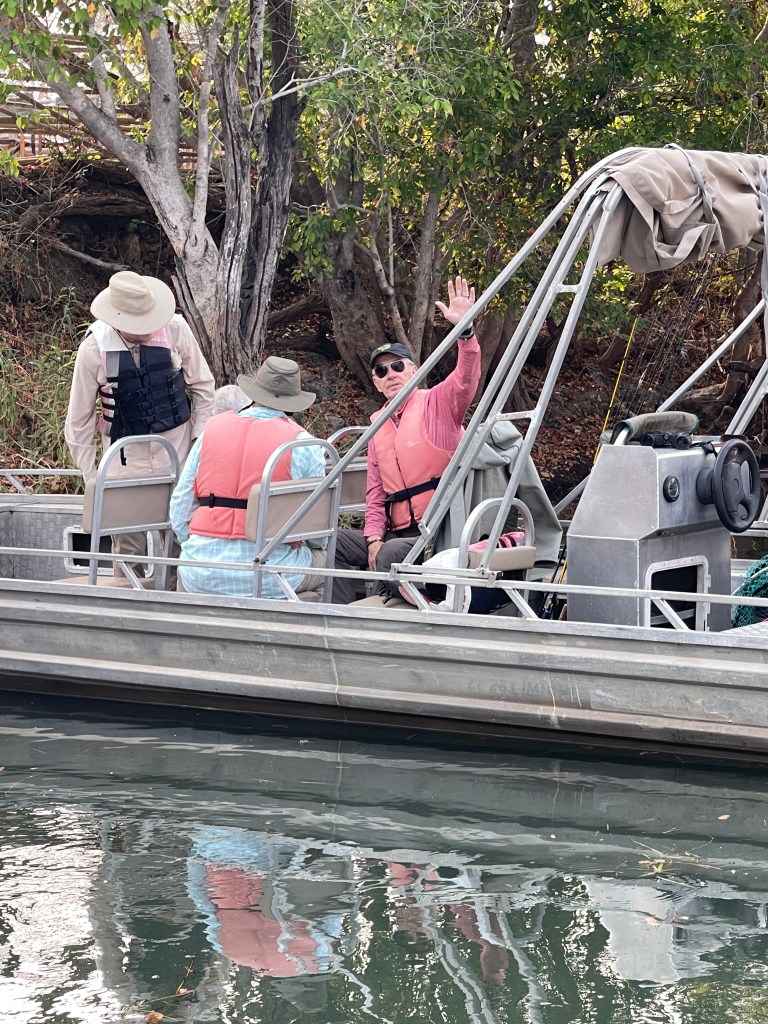
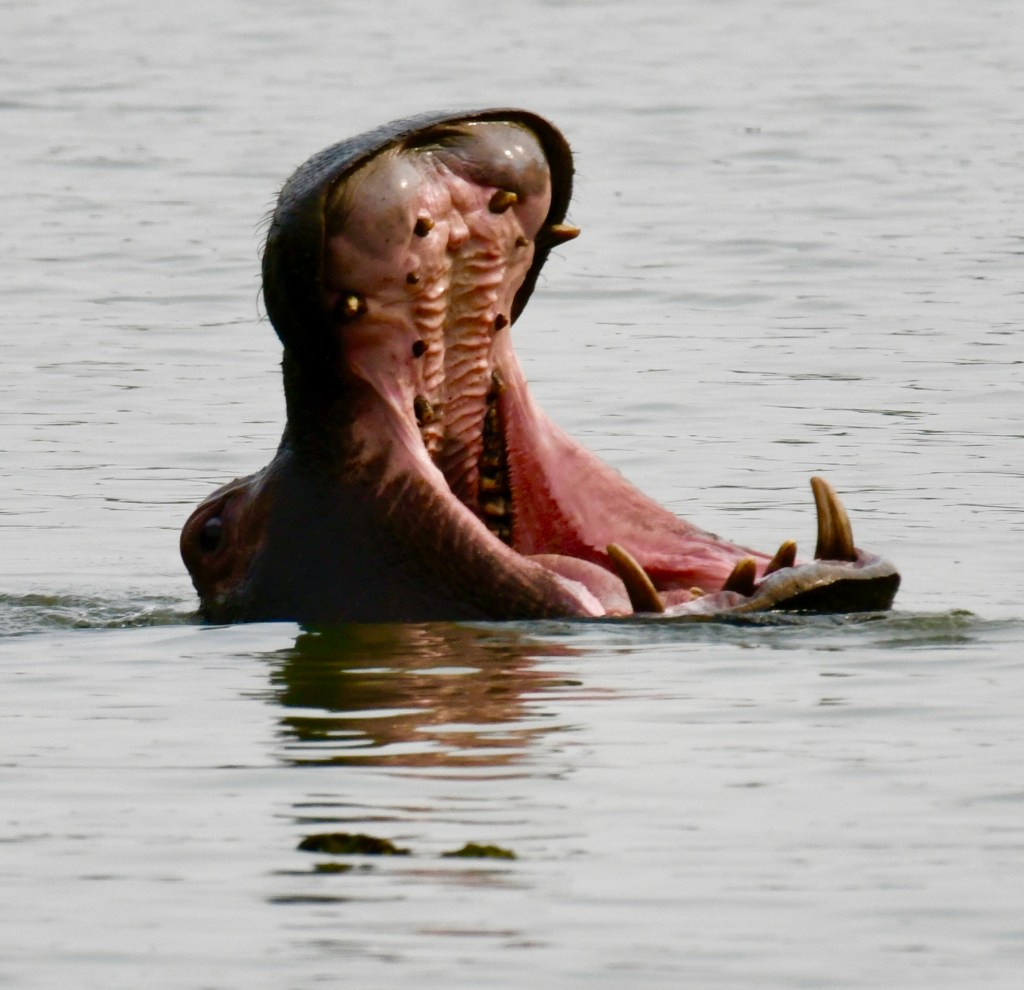
After our helicopter flight we hoped for something spectacular to round out our visit to Victoria Falls and we weren’t disappointed. In the late afternoon we boarded a pontoon boat for a cruse on the Zambezi River. This would be the best sundowner of them all. We pushed off a few miles upstream from the falls and were soon in an armada of hippos who simply noted our passing with indifference…we were insignificant, although an occasional hippo did rise and snorted at us as if to say goodbye. Beverages were broken out and our last night in the bush included the stories shared with us by a storyteller that Sku had arranged to entertain us.

When our cruise ended we were greeted at the dock and escorted to an outdoor banquet table festooned with crystal and fine china. The staff from Shearwater had staged the table under the stars on a small knoll under a slatted pergola.
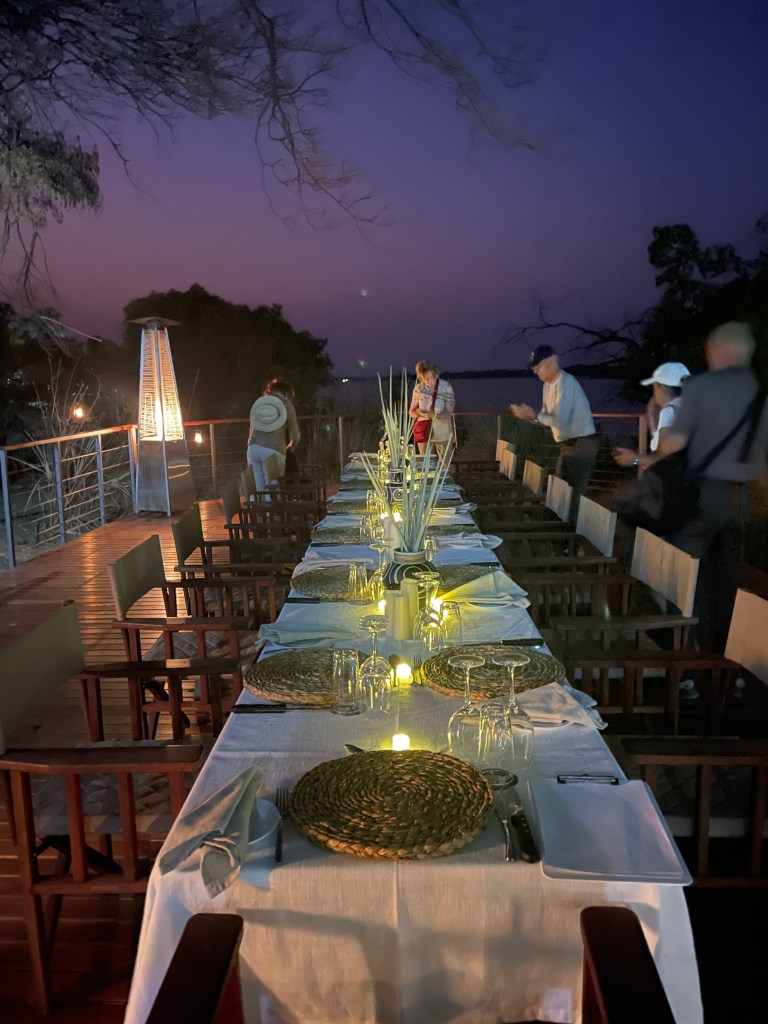
It was here that goodbyes were exchanged as some of our party would end their trip in the morning while the rest of us would fly to Capetown to round out our adventure. Sku was also saying his parting words as he would turn us over to our new Capetown guide. Our days in the bush were at an end and we were moving on to the city.




 Olio Folio