

African Mysteries
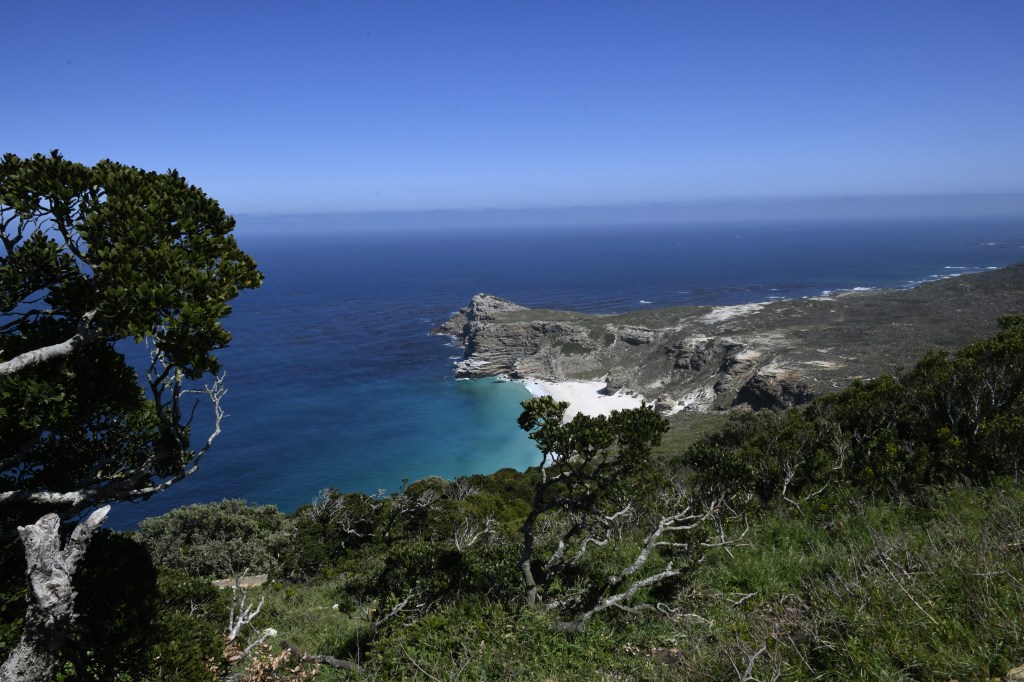
The next day’s trek will take us down the Atlantic coast to the Cape of Good Hope. On our way to the southwestern-most point on the African continent, we note surfers, rocks that some mistake for whales, roadside ostriches and long lines of container ships slowly steaming to the port. The beaches are beautiful with people about the business of recreation. The original name for the cape was coined by Bartholomew Diaz in 1487… The Cape of Storms (Cabo Das Tormentas). Eventually, this name proved to be bad for business and it was changed to the cheery title it has today. Legends in and around the Cape are many and long lived, including the famous tale of the Flying Dutchman and its crew of ghostly sailors. We are all aware of the fact that we have arrived at one of the most famous places on earth. We appropriately take hundreds of pictures at the post that is so prominent in lore.


On the return trip up the coast, Khotsu recommends a stop at Simonstown, one of the most picturesque towns on the route. We stop for fish and chips at The Salty Sea Dog and the hake and chips are characteristically excellent.
After lunch, we move up the coast to Boulders Beach to observe a penguin colony…a group that old hands at the cape have named, “jackass penguins”. Like the cape itself, this title went through a sanitation and the jackasses are now referred to as Cape Penguins in all the tourist publications. The unlikely birds are amusing and fascinating by any name.
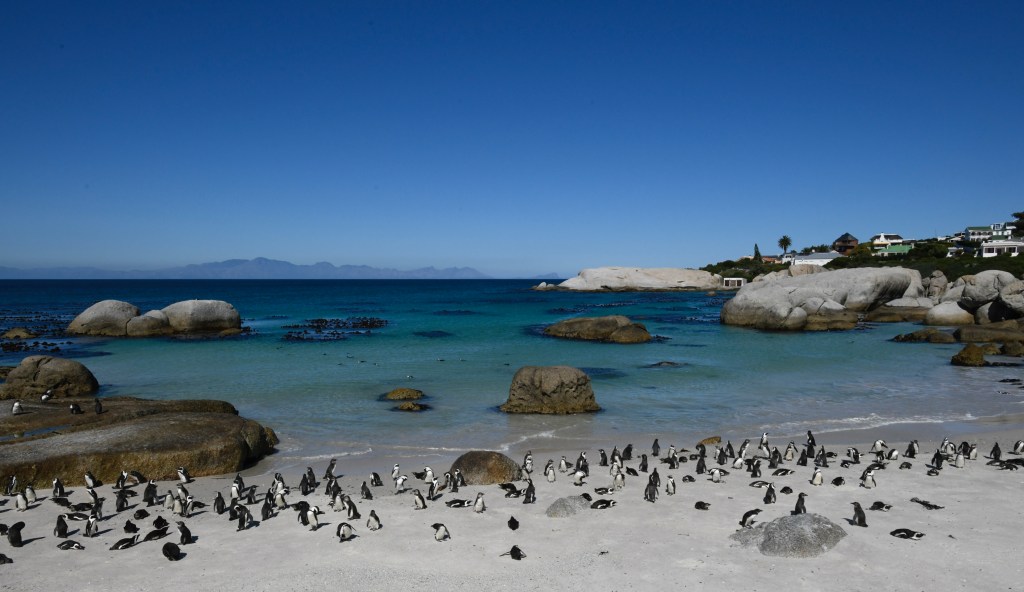
We are watching more than 1,000 breeding pairs in full waddle from a boardwalk that leads directly to the beach.

These birds are only found on this coast and they torpedo through the cove and entertain us with constant braying. This beach is a “must-see” for all tourists and some actually rent vrbos to facilitate long sessions of contact…the birds are a destination.
We head back to our hotel and en route, Khotsu briefs us on tomorrow’s itinerary which includes a long day in Stellenbosch in the heart of South Africa’s wine country.
Prior to departure for the wine country visit an interesting scene develops at our breakfast buffet. A large group of local teenagers has taken over the Hotel. They are the best students in math and science from regional schools and a stay at the hotel is their reward for their academic achievements. The kids were amazed by the hotel elevators and they crowded in and rode them up and down repeatedly. They were equally stunned by the buffet where limitless food was on offer. Kids were piling eggs, bacon, fruit and cheeses on their plates and most had erected towers of bread slices on a side plate. The largest tower reached an impressive seven slices and few boasted nothing less than four slices. After eating all of this food many were filling their pockets with any food that was portable. This was a cornucopia for children who had limited food resources in their homes.
The poverty of these kids was as clear as their intelligence. As we watched the food cacheing it was clear that these kids were used to severe poverty and as they paraded around us – people who were never hungry – it seemed like a microcosm of Africa. So many vivid contrast and harsh juxtapositions had been presented on the trip and this was yet another. We had seen life/death, wet/dry, beauty/ugliness, poverty/excess and a host of other relationships, but the experience of the privileged tourists that never had to stockpile food dining with those who were always hungry was sobering, indeed. It was a good time for us to be grateful for all of our advantages.
On our drive to the wine country, the manifestations of poverty continued to bombard us as we pass through the townships that dot the outskirts of Cape Town.

Townships are the embodiment of the horrors of exclusion and racism that has dogged Africa for generations. There are over 500 townships in the area where poor Africans, Asians, Arabs and people of color eke out their lives. The history of the townships begins with the effort to concentrate cheap labor (black labor) in areas close by industrial undertakings including coal, mineral and diamond mines. Centralizing a captive labor force proved a boon to the bottom line. Add racism to this mix and the “dormitory towns” become a sink of poverty and desperation. The living conditions are bleak and no social services or infrastructure are available. The poverty is staggering. In modern times, many people of color were relocated to these areas. We will learn more about this later.
The contrast between the townships and Stellenbosch couldn’t have been more dramatic.
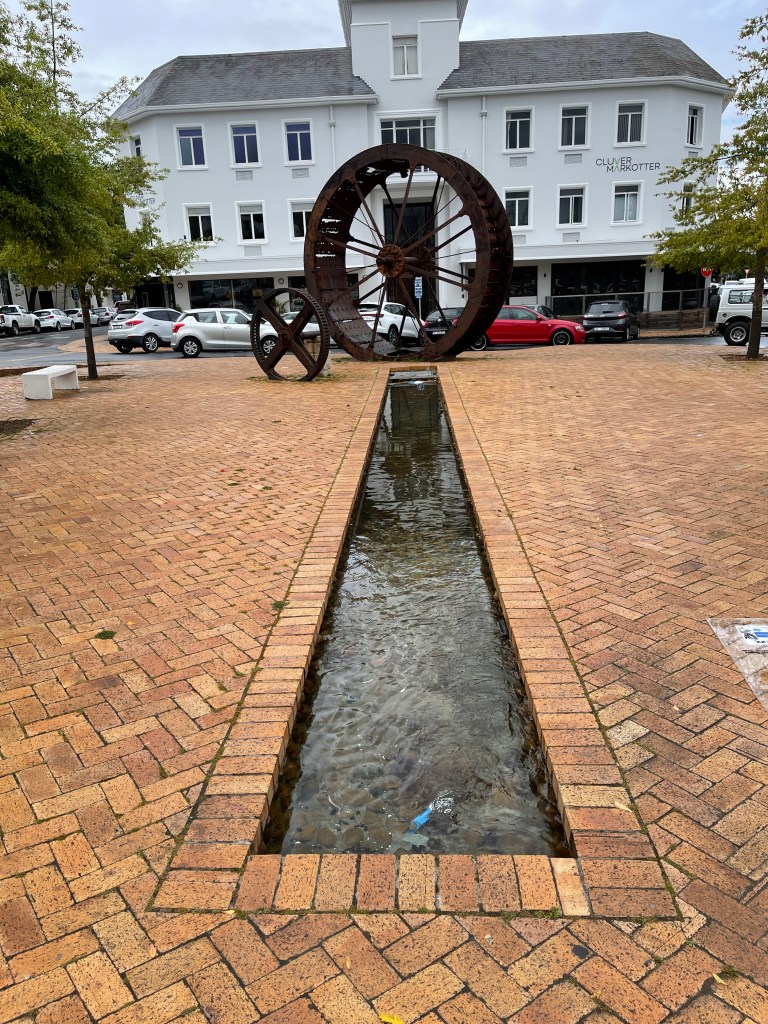
Our first stop in Stellenbosch included a tour of the Dutch mansions built from the 1600’s to the nineteenth century. Each home had its “servants quarters” and after the townships we knew what that meant. The town includes a university and a vibrant commercial district. The town was founded in 1679 by Simon van Der Stel, the governor of the Cape Colony. In a self-effacing manner, Simon named the town after himself. Dutch influence is everywhere from the impressive water works to the names on the shops. Today more than 70,000 people live in the town.
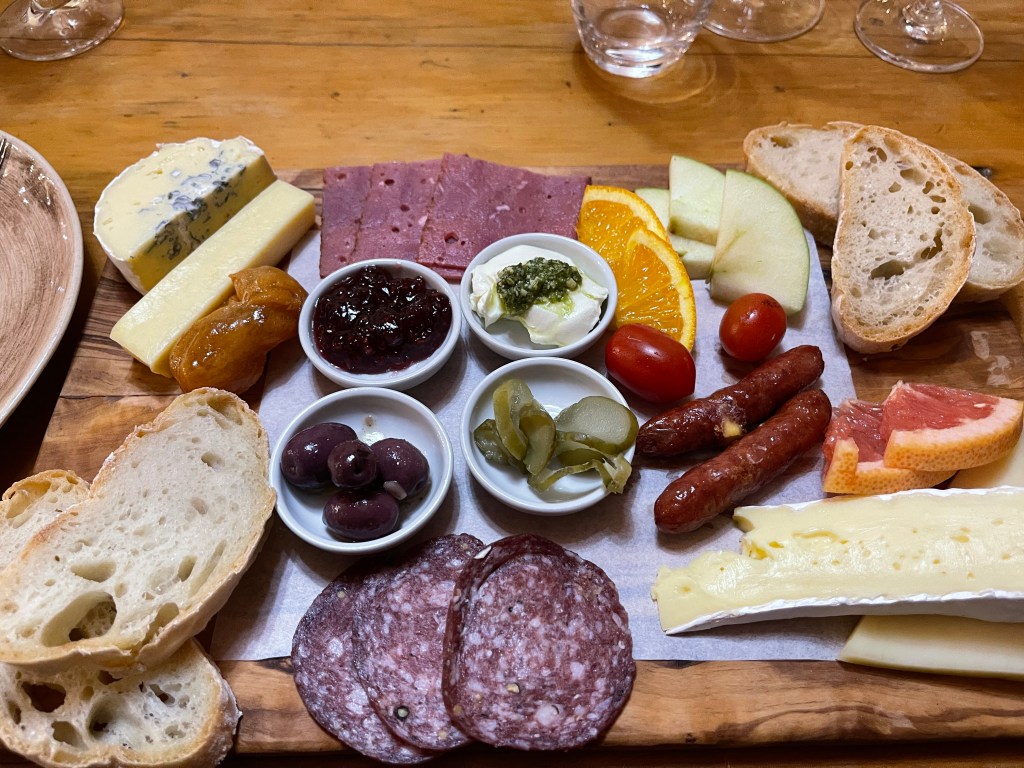
In short order we arrive at the first of three wineries that we will visit. We are led to the tasting room at Murati Wineries and we are presented with individual charcuterie boards heavy with items for pairing with the wines.
We also get a short course on South African wine. While some believe that the region’s first grapes were planted by Huguenot refugees fresh from persecution in France, the father of the industry is Jan van Riebeck, the Governor of Cape Town who produced wine for public consumption in 1659. Soils in the region carry high concentration of clay, sandstone and shale that give depth to the flavor of the wines. In fact, more than 50 soil types are found in the Stellenbosch region making flavor varieties a certainty. We will sample them at the Murati, L’avenir and Dornier estates before the day is over.

The real stars of the wineries are the estates themselves. Groomed grounds, water features and formal gardens made the surroundings as pleasant as the vintages. During our rest in these Edenic surroundings we become aware of the fact that tomorrow will be our last day in Cape Town and the last non-travel day of the trip. Our African adventure is coming to a close.

 Olio Folio