

African Mysteries
The day after our village visit was the first time we experienced the African bush place. We flew to Livingstone in Zambia where we were to take a bus from the dirt airstrip to Kafue National Park. Kafue was created by an initiative to link multiple park areas to form a large, “conservation area” around the Kafue River region. Rivers and swamp areas ring Kafue creating habitat for more than 50 animal species and a home for more than 500 bird communities. We were promised a rich animal experience.

The Kafue River, Zambia
We will stay at the Lufupa Tented Camp on the banks of the Kafue River. Linda and I are booked into tent number one and as we move to the tent we realize that we are again at the farthest distance from the lodge site. That night we hear a continuous scrabbling below the tent and are informed that the sound comes from Lulu the warthog and her five offspring who are nested below us. Lulu and family call Lufupa home and for the next few days we will do the same. Lulu doesn’t seem to mind the intrusion.
The men in the group spend the afternoon fishing for bream and tilapia while the women float the river on a game viewing cruise. It proved to be nerve wracking to be on a small boat with five large men casting from every point on the compass. Hooks were flying from every direction but we miraculously avoided any punctures. The trip was successful as enough fish were landed to make a serious contribution to the evening’s dinner menu. The ladies were rewarded with close ups of the hippos and crocs.
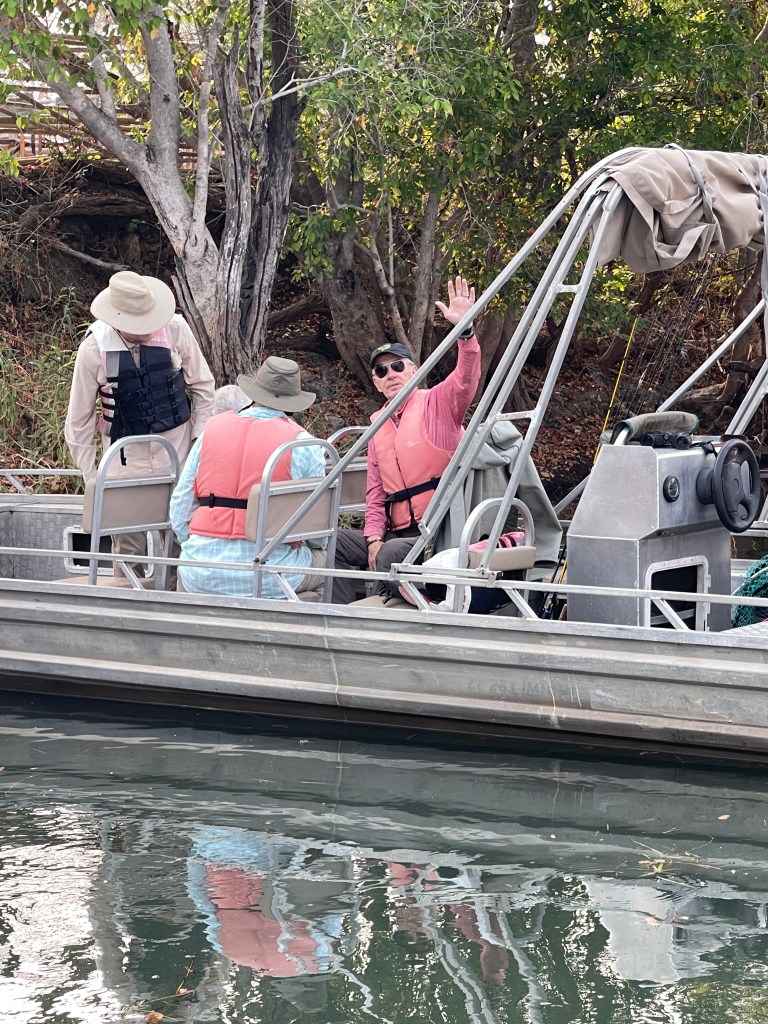
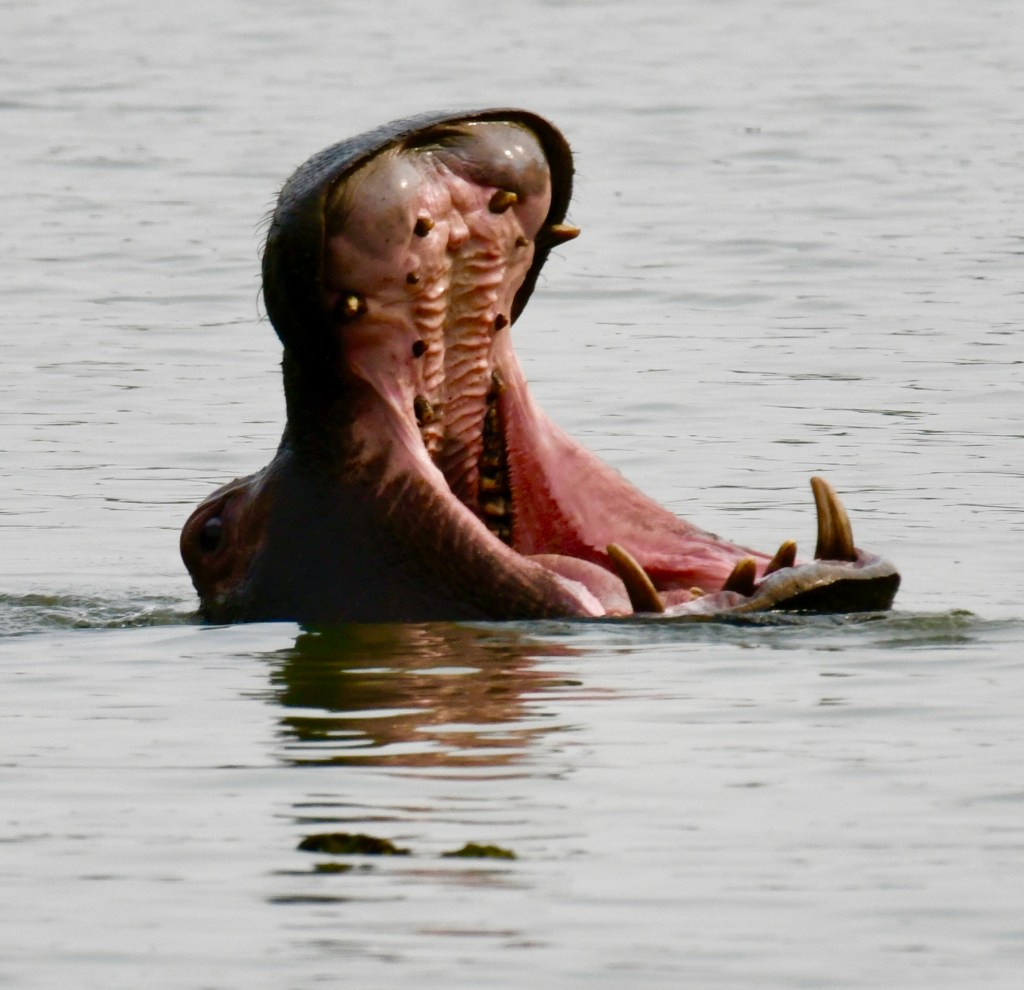
The men went fishing, while the women
went to see animals along and in the river.
After dinner, the night game drive offered two quick lessons about local matters. The first lesson was about the omnipresent tsetse fly. This aggressive insect had an outsized role in African history because of its transmission of disease and its painful bite. The second lesson was in relation to the tsetse fly and it concerned the many uses of elephant dung. The smell of DEET and other insecticides hung in the air but the greatest relief from the pests came from an old paint can full of burning elephant dung that hung from the rear bumper of the safari vehicle. The tsetse is a member of the family that includes the common housefly, a fact that made its blood sucking bite no less painful. Their relentless attacks led directly to a short course on the uses and benefits of elephant dung.
Our guide shared the knowledge as he picked up balls of semi-dry dung and stuffed them into the paint can fire. The resulting smoke drove the flies away long enough for him to share dung factoids. The same smoke that stopped the insects was also used for pain relief. Dung is also a renewable energy source and a food source for birds and baboons that eat undigested seeds in the scat. Elephants produce enough dung in a day to produce 115 sheets of very fine paper. In addition to being a high-quality fertilizer, the dung is also used in the production of artisanal beers and coffees. Perhaps the most disgusting use was the fact that bush people facing dehydration can squeeze water from the dung to avoid a grisly death. Like almost everything in Africa, elephant dung was a good deal more than what met the eye.

Our last day in Kafue was bittersweet as we looked forward to our next camp and regretted leaving a magical place. In the morning, we will leave Lufupa Camp for a bush plane flight to Chobe National Park in Botswana. We bounced into Botswana on the thermals and crosswinds of the desert and as we bump into a landing on a dirt strip, we taxi past a dilapidated shed that contains old rags and a single first extinguisher. As we pull even with the structure the pilot announces, “Terminal One.” We were happy to be on the ground.

 Olio Folio